Watercolor Wedding Couple Clipart: A Practical Guide for Creators
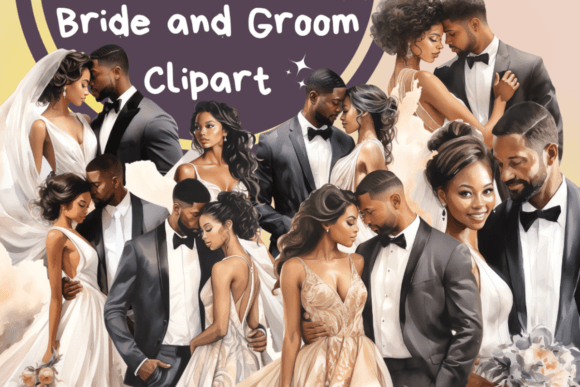
For designers, scrapbookers, and small business owners, selecting the right visual assets is a critical step in the creative process. Watercolor Wedding Couple Clipart has emerged as a popular choice for those seeking a soft, romantic aesthetic for their projects. These digital files typically feature artistic renderings of couples in wedding attire, utilizing the fluid textures and color blending characteristic of watercolor painting. Understanding what these assets offer, how they function within various workflows, and when they are the most appropriate tool can help creators make informed decisions.
Understanding Watercolor Wedding Couple Clipart
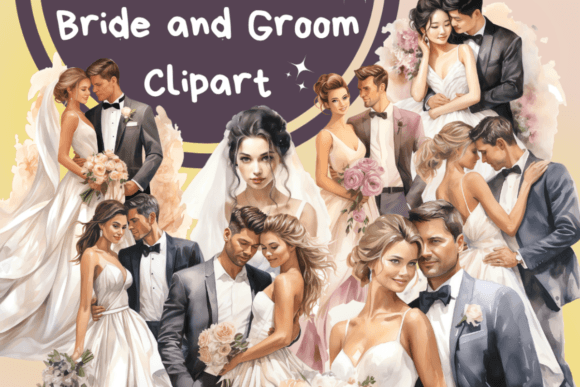
At its core, this type of clipart consists of high-resolution digital images that mimic the look of traditional watercolor paintings. Unlike vector graphics, which rely on mathematical paths to create sharp lines, watercolor clipart captures the organic imperfections, pigment washes, and paper textures associated with hand-painted art. In a typical product offering, such as a downloadable collection, users receive individual image files, often in PNG format. This format supports transparency, allowing the artwork to be layered over various backgrounds without a restrictive white box surrounding the subject.
A standard set might include dozens of unique illustrations, each rendered at a resolution suitable for both screen display and physical printing. For instance, a robust collection may provide images at 300 DPI (dots per inch) with dimensions around 2450 x 2450 pixels. This specification ensures that when printed at a size of approximately 7 x 7 inches, the details remain crisp and the colors do not appear pixelated or blurry. The "digital download" nature of these products means there is no physical inventory; instead, the buyer receives a compressed folder containing the necessary files immediately after purchase.
Why Consider This Style for Your Projects?
The appeal of watercolor wedding couple clipart lies primarily in its versatility and emotional resonance. The soft edges and pastel tones inherent to the watercolor style evoke feelings of nostalgia, romance, and elegance. This makes it particularly effective for projects where a gentle, inviting atmosphere is desired. Designers often choose this aesthetic because it bridges the gap between formal photography and whimsical illustration, offering a middle ground that feels personal yet professional.
Furthermore, the technical specifications of modern clipart collections address common pain points in design. High-resolution files eliminate the guesswork regarding print quality. Whether a user is creating a large-format banner or a small greeting card, the 300 DPI standard provides confidence that the final output will meet industry expectations. Additionally, the transparent background simplifies the compositing process. Users can place these figures onto textured paper backgrounds, floral arrangements, or solid colors without needing advanced photo editing skills to remove unwanted borders.
Benefits and Tradeoffs
Utilizing pre-made digital assets offers several distinct advantages. The primary benefit is efficiency. Creating original watercolor art from scratch requires significant time, skill, and materials. By using a curated set of clipart, creators can focus on layout, typography, and overall composition rather than spending hours painting individual elements. This accelerates production timelines, which is crucial for those working on tight deadlines for weddings or seasonal events.
Cost-effectiveness is another factor. Purchasing a single zipped folder containing multiple high-quality images is generally more affordable than commissioning custom illustrations for every project. For Print-on-Demand (POD) sellers or scrapbookers who produce volume work, this model allows for a wider variety of designs without a proportional increase in cost.
However, there are tradeoffs to consider. The most significant limitation is uniqueness. Because these files are sold digitally, other designers may own the same set. If a creator uses a specific image on a public-facing product like a POD mug or a website, there is a possibility that similar designs exist elsewhere. While this risk is mitigated by combining the clipart with unique layouts, fonts, and additional graphics, it remains a consideration for brands prioritizing total exclusivity.
Additionally, the artistic style is fixed. Once an image is purchased, the pose, expression, and color palette cannot be altered. If a client requests a specific modification—such as changing the groom's suit color or adjusting the flower bouquet—the creator cannot edit the raster image easily without specialized software and skills. This lack of flexibility contrasts with vector-based clipart, which can often be scaled and recolored with greater ease.
Ideal Use Cases
Watercolor Wedding Couple Clipart is an excellent fit for a wide range of applications where a cohesive, romantic theme is required:
- Personalized Stationery: These files are ideal for designing save-the-date cards, invitations, and thank-you notes. The soft aesthetic complements calligraphy and elegant fonts perfectly.
- Scrapbooking and Junk Journaling: Hobbyists can use these images to decorate pages documenting their own weddings or those of friends and family. The texture adds depth to mixed-media layouts.
- Paper Crafts: From die-cutting to card making, the high resolution ensures that the images look professional when trimmed and mounted on cardstock.
- Digital Products: Planners, journals, and digital stickers often utilize this style to maintain a consistent visual identity across different pages.
- Print-on-Demand (POD): Sellers can apply these designs to mugs, tote bags, and wall art, provided they adhere to the licensing terms of the specific product.
When to Consider Alternatives
While versatile, watercolor clipart is not the solution for every design challenge. If a project requires photorealism, such as a formal invitation featuring actual portraits of the couple, this illustrative style may feel too abstract. Similarly, if the design brief calls for bold, graphic lines and flat colors—common in modern, minimalist branding—watercolor textures might introduce unnecessary visual noise.
Creators should also consider alternatives if they require extensive customization. Vector graphics (SVG or EPS files) allow for infinite scaling and easy recoloring, making them superior for projects where the logo or icon needs to appear in various sizes and color schemes. Furthermore, if the end goal is a highly exclusive brand identity where no other entity should ever use the same imagery, commissioning a custom illustrator to create one-of-a-kind assets is a more secure option than purchasing a shared digital download.
Decision-Making Insights
Before integrating Watercolor Wedding Couple Clipart into a workflow, potential buyers should evaluate their specific needs against the product's capabilities. First, verify the licensing agreement. Ensure that the intended use—whether for personal scrapbooks or commercial POD items—is explicitly permitted. Second, assess the technical requirements. Confirm that the resolution (e.g., 300 DPI) and dimensions (e.g., 7 x 7 inches) align with the size of the final output. Printing a low-resolution image large will result in poor quality, regardless of the artistic style.
Finally, consider the context of the final product. Does the soft, painterly look complement the rest of the design? If the accompanying text is heavy and industrial, or if the background is busy, the delicate nature of watercolor art may get lost. By carefully weighing these factors, creators can determine if this asset class aligns with their goals, ensuring a successful and aesthetically pleasing outcome.